Self-Service Terminals vs Wall Displays: Optimising Your Betting Shop Layout

In the contemporary betting shop environment, a crucial decision for operators involves the strategic placement and function of various display technologies. While both self-service terminals and large wall displays serve to inform and engage customers, their distinct purposes necessitate careful consideration of "what goes where". Understanding their individual strengths and how they complement each other is key to creating an efficient, customer-centric space.
The Fundamental Choice: Self-Service Terminals or Wall Displays
Bookmakers today operate in a dynamic landscape where technology plays a pivotal role in customer engagement and operational efficiency. Two primary display types dominate the in-store experience: self-service betting terminals, often interactive, and large format wall displays, which broadcast information to the wider shop. While both are essential, their effective deployment requires a clear understanding of their respective strengths and ideal applications.
This isn't a question of choosing one over the other, but rather discerning how to integrate both seamlessly into your shop layout. Each serves a distinct purpose, addressing different customer needs and contributing to the overall atmosphere and functionality of your premises. The goal is to create a coherent system that guides customers, provides necessary information, and streamlines the betting process.
Self-Service Terminals: Empowering the Individual Bettor
Self-service betting terminals, or SSTs, are designed for individual interaction. They provide a private, focused environment where customers can browse markets, place bets, and manage their accounts without queuing or direct staff assistance. Their value lies in convenience, speed, and privacy, particularly for customers who know exactly what they want or prefer to take their time exploring options.
Placement for SSTs is critical. They should be easily accessible but also offer a degree of personal space. Consider areas where customers might pause or wait, or dedicated zones that encourage focused interaction. High traffic areas near the entrance might be suitable for quick bets, while a more secluded cluster could serve those making complex wagers. Ensuring adequate power and network connectivity is paramount, and modern browser-based vs hardware display systems can significantly simplify deployment by reducing hardware dependencies.
- Privacy and Focus: Allows customers to concentrate on their selections without distraction.
- Reduced Queues: Frees up counter staff for more complex queries or cash transactions.
- Accessibility: Can be placed at various heights or locations to improve access.
- Extended Offerings: Often provide a wider range of markets or features than might be displayed on wall boards.
Wall Displays: The Shop's Communal Information Canvas
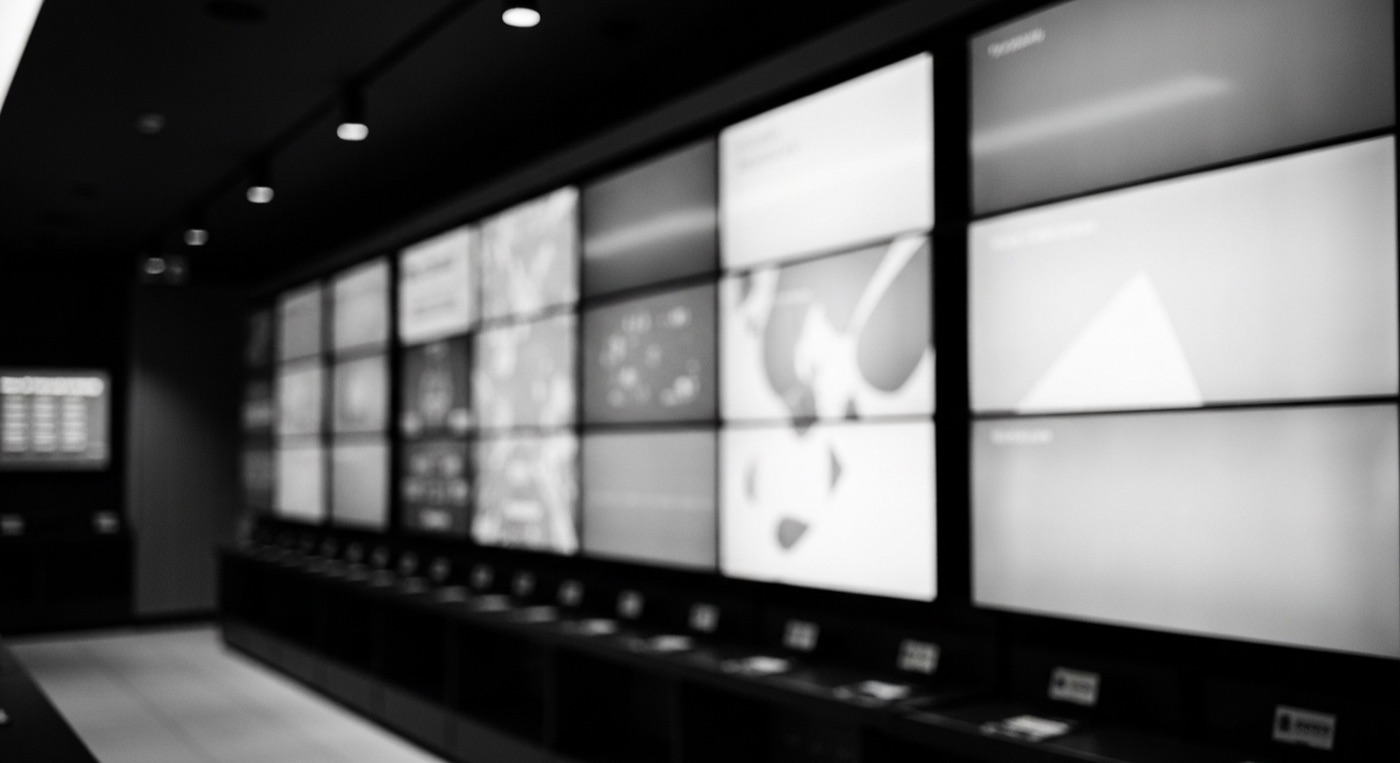
In contrast to SSTs, wall displays are public facing. They are the shop's central nervous system, broadcasting live odds, results, promotions, and race information to everyone present. Their primary role is to inform, excite, and guide the collective customer base. These large format screens create atmosphere, highlight key events, and provide a dynamic backdrop to the betting experience.
Effective wall display placement means visibility from multiple vantage points. They should be strategically positioned to capture attention without overwhelming the space. Consider the natural sightlines of customers as they enter, move around, or gather in specific areas. High definition screens are essential for legibility, and our guide on selecting the right screens and TVs for your betting shop offers further insights into hardware considerations.
- Communal Information: Shares critical data like odds, results, and race times instantly.
- Atmosphere Creation: Enhances excitement and engagement, especially during major events.
- Promotional Tool: Ideal for showcasing special offers or upcoming fixtures.
- Directional Guidance: Helps customers quickly identify relevant markets or events.
Achieving Synergy: How Both Systems Work Together
The true power of a modern betting shop lies not in the isolated function of SSTs or wall displays, but in their harmonious integration. Wall displays can serve as the initial prompt, highlighting an exciting upcoming race or a popular market. A customer sees this, their interest is piqued, and they then move to an SST for a more detailed exploration and to place their specific bet. This seamless flow enhances the customer journey and optimises their time in the shop.
Consider a scenario where a wall display shows live horse racing odds and results, creating a buzz. Simultaneously, SSTs allow individual bettors to quickly place their next wager on an upcoming race without missing a moment of the current action. This complementary relationship ensures both broad information dissemination and personalised betting opportunities are always available. For a comprehensive look at integrating these elements, refer to our In-Store Displays for Betting Shops: The Complete Guide.
Strategic Placement: Guiding Principles for Your Layout
Designing your betting shop layout requires a thoughtful approach to customer flow and interaction zones.
- Entry Points: Large, eye-catching wall displays near the entrance can immediately inform customers of key events or promotions. SSTs might be placed slightly further in, allowing initial orientation.
- High Traffic Areas: Position wall displays in areas where customers naturally congregate or pass through, ensuring maximum visibility.
- Dedicated Betting Zones: Create specific areas for SSTs, perhaps with comfortable standing room or stools, encouraging sustained engagement.
- Queue Management: Use wall displays to divert attention and provide information to customers waiting for counter service, potentially reducing perceived wait times.
- Visibility and Legibility: Ensure all screens, both large and small, are free from glare and positioned at appropriate heights for comfortable viewing.
Key takeaway
Strategic deployment of self-service betting terminals and wall displays is about understanding customer behaviour and designing a shop layout that intuitively guides them through their betting journey.
The Role of Modern, Flexible Display Systems
The evolution of display technology offers significant advantages for bookmakers. Modern browser-based display systems, suchs as those offered by Carthage, eliminate the need for specialist hardware at each location. This means a standard smart TV or a small media player connected to any screen can act as a fully functional display, whether it's a large wall board or an interactive SST.
This approach simplifies deployment across multiple branches from one central location. Content updates, market changes, and promotional messages can be pushed out instantly to all screens, ensuring consistency and accuracy. This flexibility is crucial for adapting quickly to live events or rolling out new services without significant on-site technical intervention. It frees operators from the complexities of managing disparate hardware, allowing them to focus on the customer experience. For more information on how our solutions can benefit your operations, visit Carthage Solutions.
Optimising for Customer Flow and Experience
Beyond mere placement, consider how the combined presence of SSTs and wall displays influences customer movement and overall satisfaction. A well-designed shop minimises bottlenecks, provides clear pathways, and ensures that customers can always find the information or service they need.
Wall displays can act as navigational aids, directing customers to specific betting zones or highlighting where SSTs are located. Conversely, SSTs can offer a more detailed dive into information initially presented on a large screen. This symbiotic relationship ensures that both quick, casual bettors and those seeking a more in-depth experience are equally well served, leading to a more positive and efficient visit for everyone.
Making the Right Decisions for Your Betting Shop
Ultimately, the optimal balance and placement of self-service terminals and wall displays will depend on your specific shop's size, layout, customer demographics, and operational goals. There is no one-size-fits-all solution, but by applying these principles, bookmakers can create an environment that is both highly functional and engaging.
Invest time in observing customer behaviour, gather feedback, and be prepared to iterate your layout as needed. Leveraging flexible, browser-based display systems allows for easier adjustments and ensures your shop remains at the forefront of customer service and technological efficiency. A well-thought-out display strategy is an investment in both immediate operational gains and long-term customer loyalty.
Frequently asked questions
Should I prioritise self-service terminals or large wall displays in a smaller betting shop?
In a smaller shop, space is at a premium, so efficiency is key. Prioritise a central, highly visible wall display for core information, as it serves all customers simultaneously. Then, strategically place one or two compact self-service terminals in less obstructive areas, perhaps near a wall, to provide individual betting options without creating congestion. The goal is to avoid overcrowding while still offering both communal and personal betting experiences.
How can I ensure my self-service terminals are always up-to-date with the latest odds and events?
Modern browser-based display systems are ideal for this. They allow you to manage and update content for all your self-service terminals from a central control panel. As long as your terminals have an internet connection, changes to odds, markets, or promotions can be pushed out instantly, ensuring real-time accuracy across all your branches without requiring manual updates at each terminal.
Can wall displays and self-service terminals share content or integrate with each other?
Absolutely, and this is highly recommended for an optimal customer experience. With a unified, browser-based content management system, you can often push similar or complementary content to both display types. For example, a wall display might highlight a major event, while self-service terminals can offer detailed market options for that same event. This integration creates a cohesive information flow and enhances the customer's journey from awareness to betting.
See it on your own wall
Carthage builds browser-based display systems for betting retail: sport, racing, numbers and multi-game boards, rolled out across every branch with no specialist hardware.
Book a DemoRelated insights
In-Store Displays for Betting Shops: The Complete Guide
Everything a bookmaker needs to know about retail display systems in 2026: what to put on screen, the hardware question, costs, and rolling out across every branch.
Optimising Your Betting Displays for the Big Event Rush
Get your betting shop displays ready for big sport events. Focus on dynamic content, clear layouts, and efficient multi-branch management to handle the rush

Branding Your In-Store Betting Screens: A Strategic Imperative
Unlock the power of branded digital signage in your betting shop. Consistent visual identity on your in-store screens elevates punter experience and reinforces your brand.